-
UniFi update blocking Tor
TLDR: UniFi Network Application 7.4.162 may start blocking Tor, even though the corresponding option is disabled.
I just spent a couple hours troubleshooting my Bitcoin Lightning node because suddenly (over night) all channels where down. After a while I realized that, while the Bitcoin node was still connected, it only connected over clearnet and no longer Tor.… Continued
-
Apple didn’t get it to work
Apple “decided to not proceed with the proposal for a hybrid client-server approach to CSAM detection for iCloud Photos from a few years ago,” and “concluded it was not practically possible to implement without ultimately imperiling the security and privacy of our users.”… Continued
-
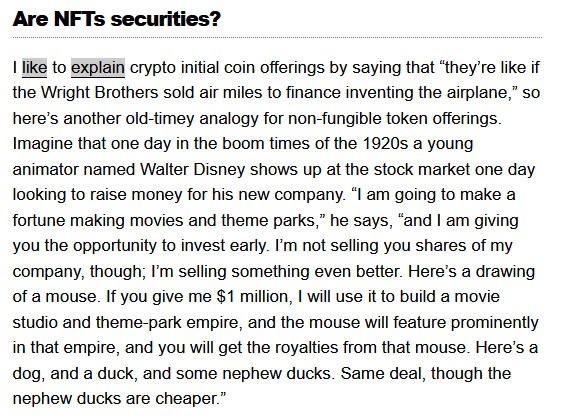
Are NFTs securities?
New perspective that I haven’t heard before, better explains why quite a few respectable people argue that (many) NFTs are securities. Great newsletter as usual by Matt Levine.
I like to explain crypto initial coin offerings by saying that “they’re like if the Wright Brothers sold air miles to finance inventing the airplane,” so here’s another old-timey analogy for non-fungible token offerings.… Continued
-

Custody & Post-Trade-Infrastructure
Die HSLU bietet ab Oktober 2023 mit dem CAS Crypto Finance & Cryptocurrencies wieder die Gelegenheit, sich in diesem wichtigen Bereich mit Expertenwissen weiterzubilden.
Ich werde das Themen Custody und Post-Trade-Infraktruktur vertiefen, und freue mich jetzt schon wieder auf die anregenden Diskussionen, wenn wir ausgehend von der SWIFT-Architektur herführen, wie das heute und morgen auf Blockchain-Basis funktioniert.
-

Doxx through Bankruptcy
This is bad! They worked out more than 15,000 personal crypto wallets from last year’s Celsius filing — all tied to real names.
Celsius filing revealed 15,000 personal crypto wallets holding $3 billion at their peak -

Entropy
Here is another reminder that using strong entropy (randomness) for crypto wallets is a must, otherwise people are able to guess your private keys and steal all assets.
Klever Alert: External Security Incident -

Multichain Bridges Experience Unannounced Outflows of Over $130M in Crypto, looks to be hacked again. There is just not a lot of safe and secure infrastructure in crypto yet, be mindful out there!
-
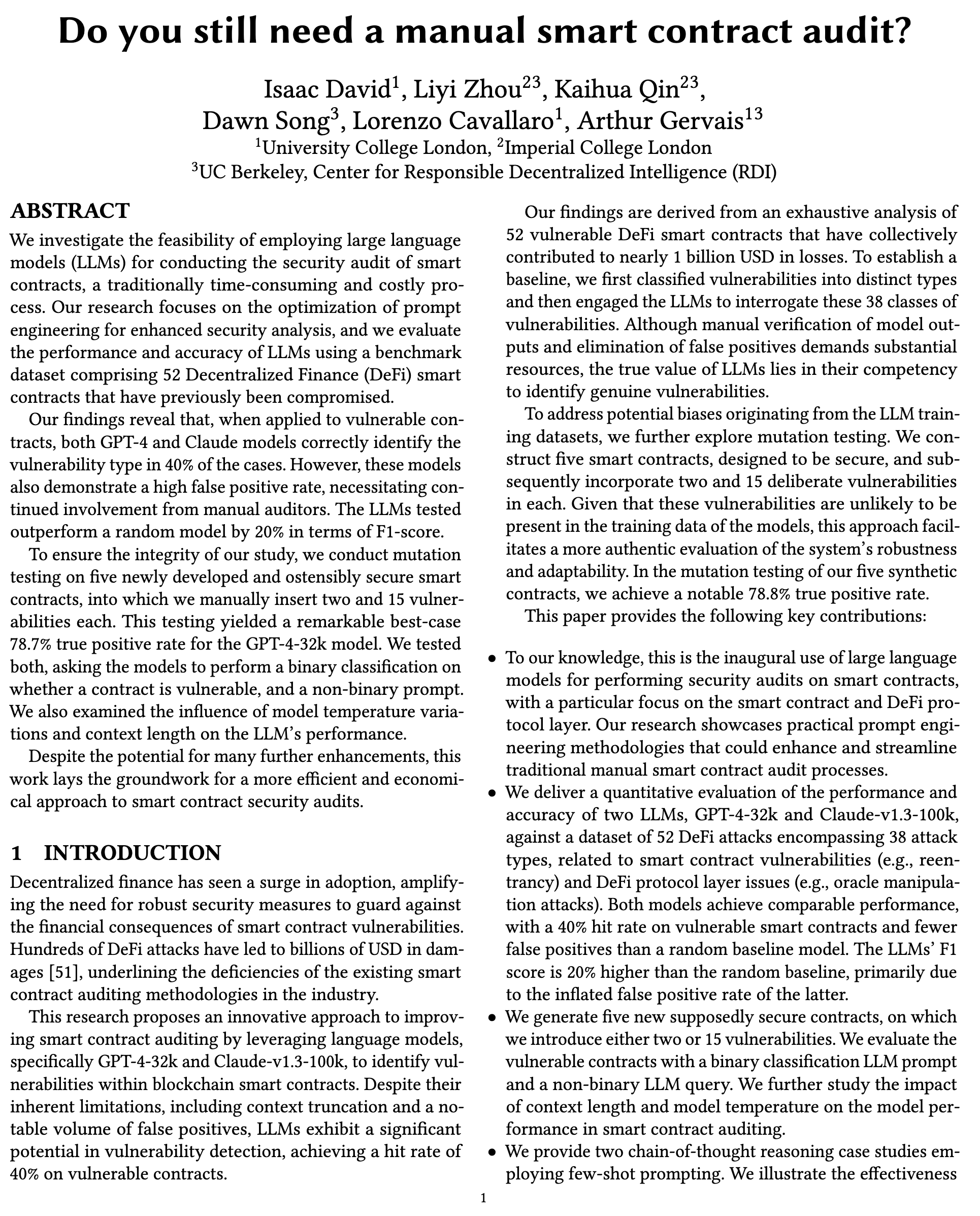
Fool with a Tool
Impressive progress using an LLM to support smart contract auditors with their work.
Worth repeating: good people will be able to do more good stuff with new tools, but a fool with a tool is still a fool – they’ll just produce a lot more foolishness faster than before.… Continued -

Meta Device
Meta is selling a VR experience while Apple is selling a device that can do anything – who’s playing the open platform game now? But also: which model will win (if any)? Jury is still out there.